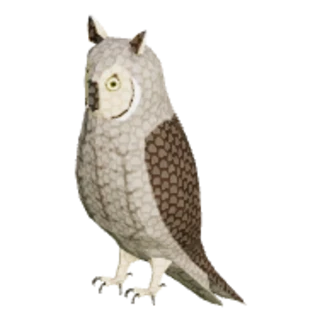
Owl
Strigiformes (owls)
Bird
Owls are birds of prey that mostly hunt at night. Soft, fringed feathers let them fly almost silently. Their eyes face forward and cannot move, so they turn their heads instead, very far around.
🌍 Where does it live?
Forests, farmland, meadows, deserts and towns on every continent except Antarctica.
🍽️ What does it eat?
Mice, voles, rats, small birds, frogs and insects. They swallow small prey whole.
⚠️ Who are its enemies?
Eagles, hawks and bigger owls.
🦴 Built for its life
Owls have huge forward-facing eyes, a flat face that funnels sound to the ears like a satellite dish, soft-edged feathers for silent flight and strong talons. They can turn their heads about 270 degrees.
🕒 A day in its life
Most owls sleep in the day in tree holes or dense branches and hunt at night from a perch, listening for prey. Small birds sometimes find a sleeping owl and "mob" it with noisy calls until it moves away.
👪 Family life
Owls lay 2 to 4 eggs in a tree hole, an old nest or a barn. The chicks, called owlets, hatch a few days apart, so they are different sizes.
💡 Did you know?
- Owls can turn their heads very far around 🔄
- Owl feathers have soft edges so they fly silently 🤫
- In many owls one ear is higher than the other, to find sounds 👂
- Owls swallow small food whole and cough up pellets 🦉
- Owls have big eyes for seeing at night 🌙
🧠 Quick quiz
❓ What is an owl pellet?
- A ball of fur and bones the owl coughs up
- An owl egg
- An owl nest
✅ Answer: A. A ball of fur and bones the owl coughs up
Owls cannot digest fur and bones, so they cough them up as a neat little pellet.
 Rat
 Frog
 Rabbit
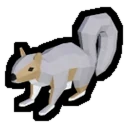 Squirrel
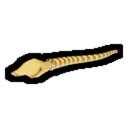 Snake
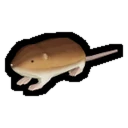 Marmot
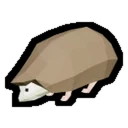 Hedgehog
 Duck
🎮 In Wild Valley: It lives in these worlds from the start: Wild Valley, Wetlands, Woodland. Tap a owl in the game to see its card, then tap the 📖 book to come back to this page.
Its home habitats: 🪷 Wetlands 🌳 Woodland 🌼 Wild Valley meadows
🎮 Play Wild ValleyMore birds to learn about
 Chicken
 Flamingo
 Eagle
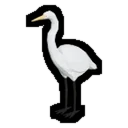 Cattle Egret
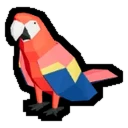 Parrot
 Seagull
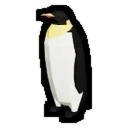 Penguin
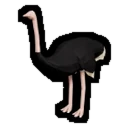 Ostrich
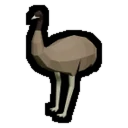 Emu
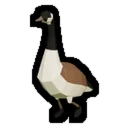 Goose
Facts are typical values for wild animals from zoo, museum and wildlife-science sources; real animals vary. IUCN = the International Union for Conservation of Nature Red List. Spotted a mistake? Tell us.