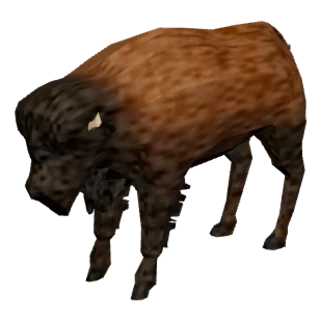
Bison
Bison bison (American bison)
MammalIUCN: Near Threatened
The American bison is the heaviest land animal in North America. Millions once roamed the prairies. Bison have a big shoulder hump of muscle that lets them swing their heads to push away snow.
🌍 Where does it live?
Grasslands and open forests of North America, mostly in parks and reserves.
🍽️ What does it eat?
Grasses and sedges.
⚠️ Who are its enemies?
Wolves and bears; wolves usually try for young, old or weak bison.
🦴 Built for its life
Bison have a massive head and a hump of muscle on their shoulders. Their thick winter coat is so warm that snow can lie on their backs without melting. Both males and females have short, curved horns.
🕒 A day in its life
Bison graze in herds, moving and resting through the day. They roll in dusty hollows called wallows to scratch and keep off insects. In winter, they swing their heads to sweep snow aside and reach the grass.
👪 Family life
A cow gives birth to one reddish calf in spring. Calves are nicknamed "red dogs" because of their color.
💡 Did you know?
- Bison are the biggest land animals in North America 🦬
- Bison use their big heads to push snow away to find grass ❄️
- Bison calves are reddish-orange at first 🦬
- Bison can run fast and jump over fences 💨
🧠 Quick quiz
❓ How do bison find grass in winter?
- They swing their heads to sweep away the snow
- They dig with their tails
- They fly south
✅ Answer: A. They swing their heads to sweep away the snow
Strong neck and shoulder muscles let bison plough through deep snow with their heads.
🔗 Its place in the Wild Valley food web
Watches out for:
 LionLion
 Siberian TigerSiberian Tiger
 Bengal TigerBengal Tiger
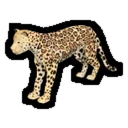 Jaguar
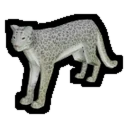 Snow Leopard
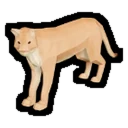 Cougar
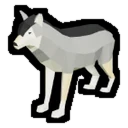 WolfWolf
 Crocodile
Read more: What is a food chain? · Predators and prey
🎮 In Wild Valley: It is not in any world at the start. Bring it to your world from 🌿 Nature energy → 🆕 New animals. Tap a bison in the game to see its card, then tap the 📖 book to come back to this page.
🎮 Play Wild ValleyMore mammals to learn about
 Rabbit
 Squirrel
 Bighorn Ram
 Marmot
 Deer
 Fox
 Zebra
 Giraffe
 Elephant
 Gazelle
 Wild Boar
 Bear
Facts are typical values for wild animals from zoo, museum and wildlife-science sources; real animals vary. IUCN = the International Union for Conservation of Nature Red List. Spotted a mistake? Tell us.