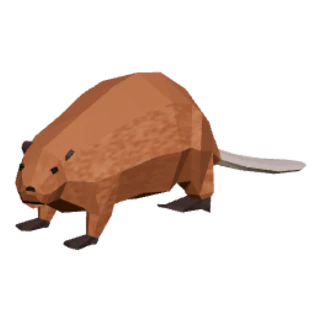
Beaver
Castor (beavers)
Mammal
Beavers are big rodents that change the land around them. They cut down trees with their strong orange teeth and build dams that turn streams into ponds. Those ponds become homes for frogs, fish, ducks and many other animals.
🌍 Where does it live?
Rivers, streams and lakes in forests of North America, Europe and Asia.
🍽️ What does it eat?
Bark, leaves, twigs, roots and water plants.
⚠️ Who are its enemies?
Wolves, bears, cougars and lynx.
🦴 Built for its life
Beavers have a flat, scaly tail used as a rudder and a prop, webbed back feet for swimming, see-through eyelids that act like goggles, and lips that close behind their front teeth so they can gnaw under water.
🕒 A day in its life
Beavers are mostly active at night. They cut branches, drag them to the water, repair their dam and lodge with mud and sticks, and store food underwater for winter. If danger comes, a beaver slaps its tail loudly on the water as a warning.
👪 Family life
A beaver family lives in a lodge of sticks and mud with an underwater door. The kits stay with their parents for about two years and help build.
💡 Did you know?
- Beavers build dams with sticks and mud 🪵
- A beaver’s teeth are orange because they are extra strong 🦷
- Beavers slap their tails on water to warn others 💦
- Beavers can stay under water for many minutes 💨
- Beaver dams make ponds that help many other animals 🐸
🧠 Quick quiz
❓ Why are a beaver's teeth orange?
- They eat carrots
- Iron makes them extra strong
- They are painted by mud
✅ Answer: B. Iron makes them extra strong
Beaver teeth have iron in their front layer, which makes them orange and very tough.
🔗 Its place in the Wild Valley food web
Watches out for:
 Cougar
 Wolf
 Crocodile
 Eagle
Read more: What is a food chain? · Predators and prey
🎮 In Wild Valley: It lives in these worlds from the start: Wetlands. Tap a beaver in the game to see its card, then tap the 📖 book to come back to this page.
Its home habitats: 🪷 Wetlands
🎮 Play Wild ValleyMore mammals to learn about
 Rabbit
 Squirrel
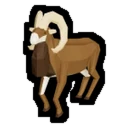 Bighorn Ram
 Marmot
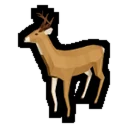 Deer
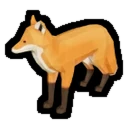 Fox
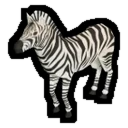 Zebra
 Giraffe
 Elephant
 Gazelle
 Wild Boar
 Bear
Facts are typical values for wild animals from zoo, museum and wildlife-science sources; real animals vary. IUCN = the International Union for Conservation of Nature Red List. Spotted a mistake? Tell us.